Repair vs. Replace: How to Decide for Critical Pump Assets (Without Guesswork)
- Homesssss
- Repair vs. Replace: How to Decide for Critical Pump Assets (Without Guesswork)
Repair vs. Replace: How to Decide for Critical Pump Assets (Without Guesswork)
When a Pump Fails, the Real Cost Isn’t the Repair — It’s the Decision Delay
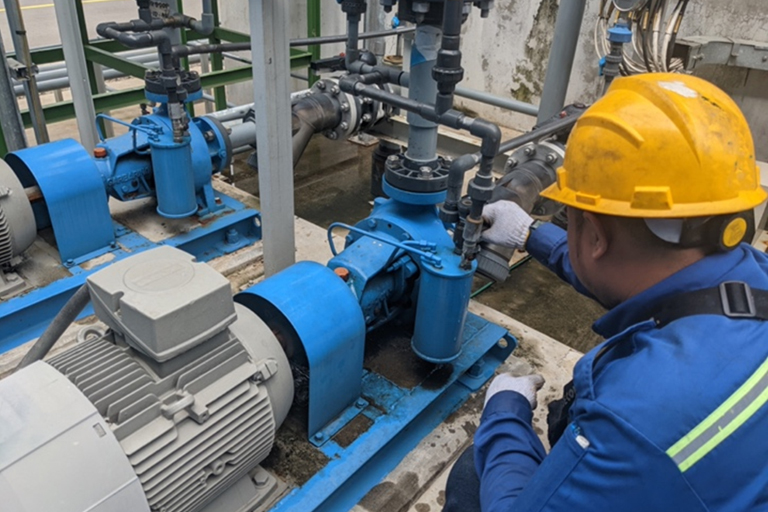
If you’ve ever had a pump go down at the worst possible time, you already know this:
the first question isn’t “What does it cost?” It’s “How fast can we get back online — and how do we keep this from happening again?” The repair vs. replace decision can feel like a gamble because the inputs are messy:
- the pump is critical but the budget is tight
- lead times are unpredictable
- the last repair didn’t last
- the true root cause isn’t always obvious
This guide gives you a repeatable way to decide — based on risk, reliability, and total lifecycle cost — not just the invoice.
Start Here: The Three Questions That Make the Decision Clear
Before looking at quotes, answer these first.
1) How critical is this pump to uptime and safety?
- Does failure stop production or disrupt service?
- Does it create environmental, safety, or compliance risk?
- Is there redundancy or a reliable bypass?
If this is a critical asset, repair vs. replace is a risk decision, not a cost decision.
2) What failed — and why?
A “failed pump” is not a diagnosis.
Seal leaks, vibration, bearing damage, cavitation, or shaft wear all point to different paths.
A sound decision requires understanding whether the failure was:
- normal component wear
- system‑induced (misapplication, suction conditions, solids, off‑BEP operation)
- installation or maintenance related
3) What is the true time‑to‑recovery?
The fastest option is not always the cheapest.
Time‑to‑recovery includes:
- teardown and inspection
- parts availability
- repair cycle time
- testing
- reinstallation, alignment, and startup
If downtime is measured in lost production or service impact, time is part of the price.
The Decision Framework: Five Factors That Point to Repair or Replace
Factor 1 — Condition of the Core Components
Repair usually makes sense when:
- the casing and volute are structurally sound
- bearing housings and fits are recoverable
- shaft damage is limited and correctable
- wear is localized and expected for the service
Replacement becomes more likely when:
- casings are heavily eroded or cracked
- fits, bores, or sealing surfaces are compromised
- distortion or chronic alignment issues exist
- prior repairs have stacked tolerances and instability
If the hard parts are compromised, repeat repairs are likely.
Factor 2 — Repeat Failures and Reliability History
If the pump has been repaired multiple times in a short period, ask:
- Are we fixing symptoms instead of causes?
- Is the pump operating far from its intended range?
- Are materials and parts appropriate for the service?
Repair works when the root cause can be corrected.
Replacement is often smarter when the service demands a different design, size, or material.
Factor 3 — Operating Point and System Reality
Many pump failures are actually system problems:
- chronic throttling
- low NPSH margin
- higher‑than‑expected solids
- operation far off BEP
Rebuilding a misapplied pump only restores it to a condition that still doesn’t fit the system.
Replacement is often the better choice when resizing or design changes are required.
Factor 4 — Lead Time and Contingency Risk
Lead times can make or break the decision.
Repair tends to win when:
- critical parts are readily available
- turnaround time is short
- performance can be validated before reinstall
Replacement tends to win when:
- parts are obsolete or unreliable
- OEM delivery is faster than repair cycle time
- warranty, revisions, or upgrades reduce future risk
For critical assets, proactive spare and repair planning is key.
Factor 5 — Total Cost of Ownership
A low‑cost repair that fails early is expensive.
Include:
- downtime exposure
- labor rework
- collateral damage to seals, bearings, couplings, or motors
- energy inefficiency
The best choice is the one that reduces repeat failures and stabilizes operation.
Quick Decision Guide
Repair is usually the right choice when:
- the pump is structurally sound
- the application is stable
- root cause can be corrected
- repair turnaround is faster than replacement
- reliability can be restored, not just patched
Replace is usually the right choice when:
- the pump is misapplied
- failures repeat despite quality repairs
- core components are compromised
- parts availability is uncertain
- long‑term reliability improvements are needed
What We See in the Field
The most common reason repair vs. replace becomes a recurring debate is simple: the pump is repaired back to a condition that still doesn’t match the service.
Common examples:
- pumps selected for clean service now handling solids
- chronic throttling causing vibration and seal failures
- quick repairs reusing shafts or fits that should be replaced
- alignment and piping strain issues never corrected
Reliable outcomes come from:
- thorough inspection
- root‑cause correction
- proper materials and tolerances
- validated startup and alignment
That’s how the failure cycle stops.
Practical Checklist Before You Decide
Gather the following:
- failure mode (leak, vibration, noise, overheating, reduced flow)
- service conditions (fluid, solids, temperature, chemistry)
- operating data (pressure, flow estimate, valve position)
- maintenance history
- photos of damaged components
- downtime tolerance and redundancy
- spare or rotating element availability
This turns opinions into clear decisions.
Common Mistakes to Avoid
- Treating every failure as a parts issue
- Choosing based on invoice cost alone
- Rebuilding without restoring critical fits
- Reinstalling without alignment and piping checks
Each one increases the risk of repeat failure.
Bottom Line
Repair vs. replace is not about cheap versus expensive.
It is about risk, reliability, and future downtime.
The right decision is the one that stabilizes operation, reduces callouts, and protects uptime.
Call to Action
Not sure which path makes sense for your pump?
Mullen helps customers make clear repair vs. replace decisions based on:
- inspection findings
- parts and lead time risk
- application requirements
- long‑term reliability impact
Talk to a Mullen specialist to review your equipment and options so you can choose the path that protects uptime.